
Vinyl Runout Codes Explained: Read the Matrix Number
Where to find a record's matrix number, what each segment of the runout code means, and how to transcribe it to tell one pressing from another.
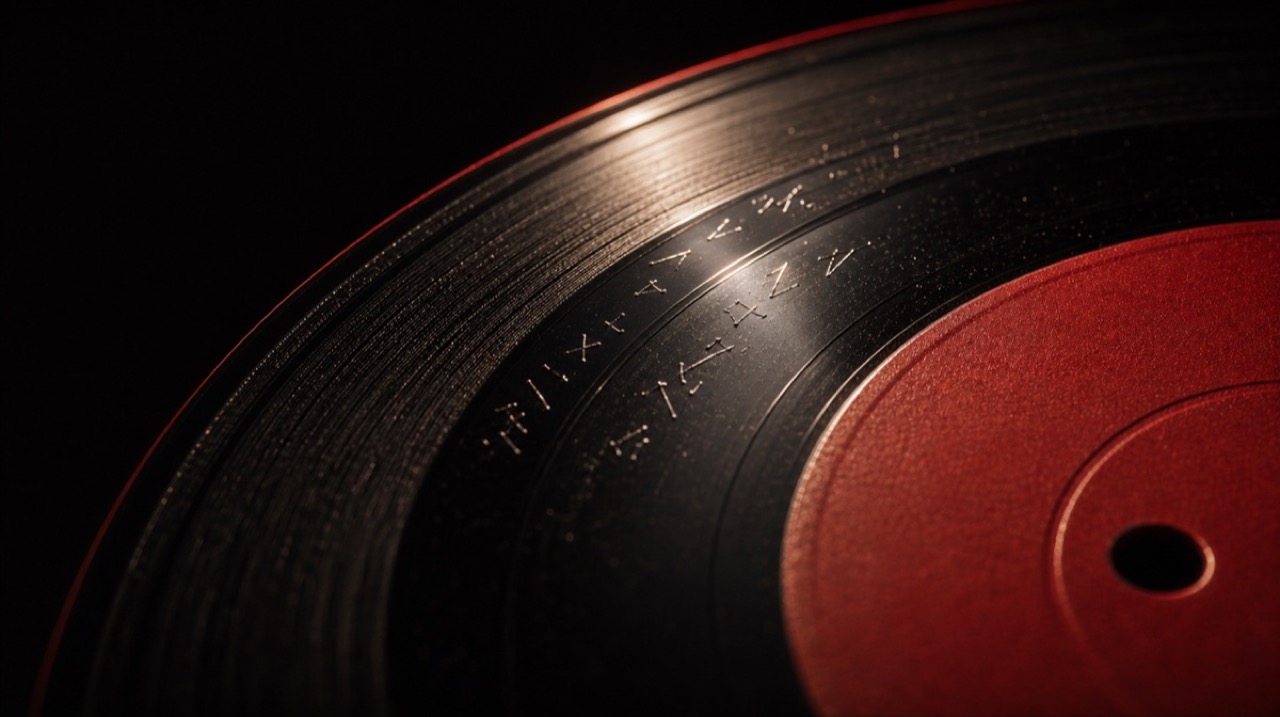
Tilt a record under a lamp and study the smooth, groove-free ring between the final track and the center label: a string of letters and numbers, scratched or stamped into the vinyl. That is the matrix code — also called the runout or dead-wax code. A typical string combines a catalog or release reference, a side identifier, and a lacquer-cut suffix; many also carry mother or stamper marks and the initials of a mastering engineer, studio, or pressing plant. When two copies wear identical labels, this code is often the only physical evidence separating one pressing from another.
Finding the Code: Raking Light and a Steady Hand
The code lives in what collectors call the dead wax — the non-grooved area between the end of the final band and the label. Hold the record flat and tilt it under a single light source; light raking across the surface at a low angle throws shallow etchings into relief. A loupe or your phone's macro mode helps with the smaller stamped characters.
While you're there, note how the characters were made. Hand-etched marks look like handwriting: uneven depth, a slight slant, wobbly curves. Machine-stamped marks use a uniform typeface with even spacing. Etched characters were typically inscribed into the lacquer at the cutting stage; stamps were usually added at the plant — and one side can carry both. Collectors often read hand-etched details as a link to the original cut, but treat that as a clue, not a verdict. Practices varied widely between plants and eras.
Anatomy of a Matrix String
Take a made-up example: XLP-2048-B-3 RM. (Illustrative only — it corresponds to no real record.)
- XLP-2048 — the release or catalog reference, often echoing the catalog number printed on the label.
- B — the side identifier.
- 3 — a lacquer-cut suffix: this side was cut from the third lacquer prepared for it.
- RM — initials. Per Discogs' cataloguing guidelines, runout markings can contain engineer, studio, or manufacturer information — often as initials or logos — plus extra text.
You may also spot small, separate numbers or letters elsewhere around the ring. In many plants' systems these tracked the mother and stamper — the intermediate metal parts used in pressing — though the notation varies so much between plants that no universal key exists. Archivists lean on these codes for a reason: matrix numbers were allocated by the record company to identify a side of a disc and follow it through the whole production process. For collectors, that production history is why the runout carries useful information about the edition of the record you are holding.
Transcribing It So It Can Be Compared
A sloppy transcription wastes the whole exercise. Work side by side:
- Copy every character exactly, keeping hyphens, spaces, and case.
- Note whether each element is etched or stamped.
- If a digit is crossed out or overstamped, record what you see and flag it — don't guess at the original.
- Do both sides. A listing that quotes only one side is ambiguous by definition.
One warning deserves bold type: a single suffix character can mark a different cut. XLP-2048-B-3 and XLP-2048-B-4 may play the same music, yet they are physically different plates — and a cataloguer will file them as different pressings.
This is where VinylLens joins the workflow. Photograph the center label, and the app's pressing identification cross-references the catalog number, label variation, and matrix details to pin down the specific pressing — while the built-in matrix and runout guide works as a pocket reference when you decode by hand.
What the Code Can — and Can't — Prove
The runout is one input, not an oracle. Pressing identification rests on the catalog number and label variation alongside the matrix details; the three should agree before you draw conclusions. Any value figure attached to the result is an estimate: reference ranges are tied to grade and shift as the grade does, so a mid-grade copy and a near-mint copy of the same cut likely sit in very different ranges. Identification — by eye or by app — is not professional authentication. For a record where the stakes are high, a specialist's opinion is worth the fee.
Three Misreads That Trip Up Collectors
- Mother number mistaken for a stamper code. They track different generations of metalwork and often sit at different positions in the runout. Conflating them leads to inflated "early pressing" claims.
- A corrected digit read as the original. Plants crossed out and re-cut characters; transcribe the visible state and note the alteration.
- Identical labels taken as identical pressings. Labels were often printed in bulk and used across multiple cuts. The dead wax can differ even when the labels match perfectly.
Once the pressing is settled, finish the job: grade the sleeve and the vinyl on the M-to-G scale in VinylLens, add the copy to your collection, and let the reference value range update as the grade changes — an estimate to orient you, not an appraisal. Photograph the runout under raking light for your own records, shoot the center label for the app's pressing identification, and check your transcription against the in-app matrix guide before you lean on any reference range.
FAQ
Does a hand-etched matrix code mean my record is a first pressing?
Not by itself. Etched characters were typically written into the lacquer at the cutting stage and stamps usually added at the plant, but practices varied widely between plants and eras. Treat etching as one clue, and confirm against the catalog number, label variation, and the full matrix string — including the lacquer-cut suffix.
My runout code almost matches a listing — is it the same pressing?
Maybe not. A single suffix character can indicate a different lacquer cut, so XLP-2048-B-3 and XLP-2048-B-4 are different plates even though everything else matches. Transcribe both sides character for character, note etched versus stamped elements and any crossed-out digits, and only call it a match when every segment lines up.
Can VinylLens confirm a pressing and its value from my photos?
VinylLens identifies a pressing from a center-label photo by matching catalog number, label variation, and matrix details, and its reference value range is an estimate tied to the grade you assign, updating as the grade changes. It is an identification aid, not professional authentication — for high-value records, consult a specialist.